The flagship program of FDPPI for 2026 namely the IDPS 2026 is scheduled for November 21 in Bangalore at Hotel Fairfield Marriott, Rajaji nagar, Bengaluru.
The program will be a day long event from 9.30 am to 5.00 pm. The Chief Guests subject to confirmation include a sitting Judge of the High Court of Karnataka, a Chairman of a Bank, and an industrialist from a large group in Mumbai. More than 30 speakers are expected to participate.
The topics which will be discussed include
1.Data Valuation and Data Inventory under SSOT principle
2. DPDPA Compliance in Banks
3. The challenge of AI and the AI Governance framework.
4. Concept of Data Audit in a multi branch operating scenario
5. Guidelines of Supreme Court on AI
6. Audit Exchange Platform of AIDAI
7. Data Governance Framework and Model Governance Framework of RBI
8. Relevance of Patient Safety Officers in DPDPA Compliance of Hospitals
9. Relevance of Branch Managers in DPDPA Compliacne of Banks
…and other related issues.
In the available time, it is proposed to have 3/4 key note addresses and 4/5 panel discussions.
Detailed program is under finalization.
Since the program is being conducted in a hotel the number of delegates would be limited. 80 % of the delegates seats are being booked now keeping 20% for FDPPI members and guests. Bookings will be accepted on first cum first served basis and earl bird discount is available till October 25 2026.
The registration is expected to close during the first week of November 2026.
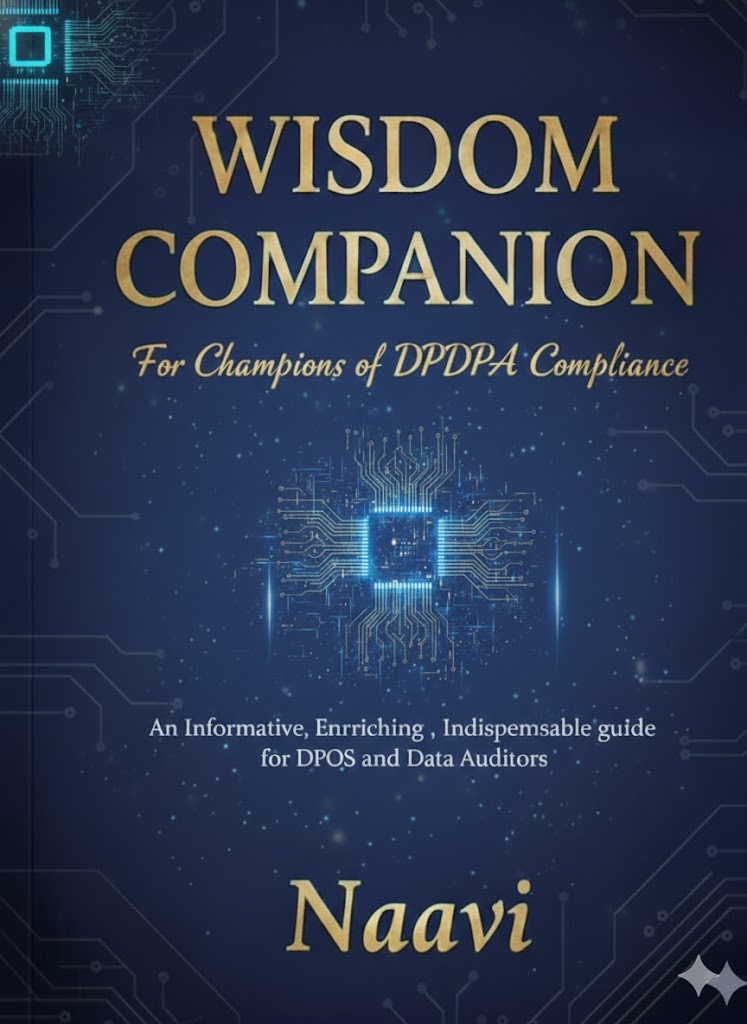
Request all patrons of Naavi.org to rush with their registrations. Cyber Law College offers all registrants upto November 1 a special offer of a copy of the book “Wisdom Companion for DPDPA Champions” to be handed over during the conference.
We are now around 213 days from 13th May 2027 when DPDPA will be fully effective. Many organizations have already started implementation. Action has started on three fronts
Engagement of consultants for implementation
Conducting Awareness Training
Create a Governance Structure for implementation
Create Policy documents at all levels
Software for Compliance management mainly for “Consent Management”
Some organizations have followed the above order of implementation. Some have also used the reverse order believing that software will do the trick and achieve the compliance.
While one can argue which is the correct order in which Compliance drive should be approached, everybody agrees that there has to be a synchronization of the elements.
Since many organizations have already jumped in with the impolementation in some fashion based on their current understanding of the requirements, they are now wondering if they are in the right track.
As the festival of Dussehra symbolizes the triumph of good over evil, righteousness over discord, and clarity over ignorance, it is the perfect time for organizations to strengthen their digital trust and overcome compliance hurdles.
In today’s evolving regulatory landscape, with the Digital Personal Data Protection Act (DPDPA) ensuring robust Data Protection Impact Assessments (DPIA) is no longer optional; it is essential.
To mark this auspicious season, FDPPI (Foundation of Data Protection Professionals in India) is excited to announce a special Dussehra Offer for businesses looking to elevate their data governance framework.
To assist companies re-visit their current approach to DPDPA implementation, FDPPI and Naavi are giving a special offer for the Dussera 2026 which commences from today.
For all the Corporate members who enrol on a 3 yearmembership plan (Visit for details) we would provide a free online DPIA session to enable review of their current implementation plan. A suitable appointment may be fixed for mutual convenience to discuss the current implementation plan and identify key areas of course correction if any.
Irrespective of whom the company is already working with, a second opinion from FDPPI is a peer review opportunity before the commitments reach an irreversible state.
Interested entities may contact Naavi or FDPPI through email.
The Digital Personal Data Protection Act, 2023 (DPDPA) recognizes a legal entity as a single Data Fiduciary or Significant Data Fiduciary. But in practice, a large organization may have hundreds or even thousands of branches, subsidiaries, regional offices, functional divisions and operational units. Each of these units may independently collect, use, store, disclose and otherwise process personal data.
In such contexts, the legal entity may be one. The data-processing reality may be many.
This creates a fundamental question for the DPDPA audit:
How does an auditor audit one enterprise when the enterprise itself operates as a collection of autonomous data-processing units?
This is the question that has led to the development of DGPSI-SOP600, a proposed Standard Operating Procedure for conducting enterprise-level data audits where a Significant Data Fiduciary has multiple sub-units.
The concept of an Independent Data Auditor is going to become an important professional function in India’s emerging data protection ecosystem.
The Association of Independent Data Auditors (AIDAI), a division of the Foundation of Data Protection Professionals in India (FDPPI), has been created with the objective of developing this professional ecosystem.
AIDAI is working towards establishing professional standards under which individuals can be trained and certified as Certified Independent Data Auditors, capable of undertaking DPDPA compliance audits and related assignments such as Data Protection Impact Assessments and Algorithmic Audits.
The objective is not merely to create another certification. The larger objective is to create confidence in the audit process itself.
One enterprise does not necessarily mean one data environment
Consider a large bank. Legally, the bank may be one entity. Operationally, however, it could have thousands of branches. Each branch may interact with customers, employees, vendors and other individuals. Each branch may generate and process personal data through its own operational processes.
The same situation can arise in:
hospitals and healthcare networks;
universities and educational institutions;
insurance companies;
large retail chains;
manufacturing enterprises;
government and public-sector organizations;
technology companies with multiple business divisions; and
multinational organizations operating through regional entities.
Some of these units may perform relatively routine processing.
Others may undertake extensive or high-risk processing.
Some may themselves have characteristics that could potentially make their operations relevant to the determination of Significant Data Fiduciary obligations.
Yet the DPDPA compliance obligation ultimately has to be viewed at the level of the legal entity to which the law applies. This creates a practical audit problem. The Central Auditor cannot simply look at the corporate headquarters and conclude that the enterprise is compliant.
The auditor needs reasonable assurance that the data-processing activities occurring across the organization have also been appropriately examined.
The “Central Auditor – Sub Unit Auditor” model
This is where the concept underlying DGPSI-SOP600 becomes important.
The proposed model distinguishes between:
1. Central or Enterprise Auditor
The Central Auditor is responsible for the overall enterprise-level audit.
The Central Auditor has to understand:
the organization’s governance framework;
enterprise-wide policies;
common technology platforms;
central data-processing activities;
common vendors and processors;
enterprise-wide security controls;
HR and employee-data practices;
privacy notices and consent mechanisms;
data retention and deletion practices;
data principal rights management;
incident and breach management;
DPIA and risk-management mechanisms; and
the manner in which individual business units implement these requirements.
But the Central Auditor may not be able to personally audit every operational location.
A bank with 5,000 branches cannot reasonably expect one audit team to physically conduct a complete independent audit of every branch within the annual audit cycle.
2. Sub-Unit Auditor
The Sub-Unit Auditor undertakes the audit of an identified branch, subsidiary, regional office, functional division or other autonomous data-processing unit. The Sub-Unit Auditor works against a common audit standard. The findings are then communicated to the Central Auditor in a prescribed format.
The Central Auditor can therefore use the work of appropriately qualified and independent Sub-Unit Auditors as an input into the enterprise-level audit.
This is a mechanism for creating audit scalability without sacrificing standardization.
The importance of a common audit standard
There is, however, an obvious problem to be resolved. If 1,000 branches are audited by 100 different auditors using 100 different methodologies, the Central Auditor will receive 100 different interpretations of “compliance.”
The answer lies in standardization.
FDPPI has already been developing the DGPSI – Data Governance and Protection Standard of India framework, including sector-specific and functional standards such as DGPSI-Banks, DGPSI-Hospital, DGPSI-Education, DGPSI-HR and DGPSI-AI.
These standards provide a common vocabulary and a common framework for evaluating data governance and protection practices.
AIDAI proposes to build upon this foundation by establishing a common methodology for coordination between the Central Auditor and Sub-Unit Auditors.
Thus, the objective is:
Different auditors. Different locations. One audit language. One audit methodology. One consolidated assurance framework.
Why SOP600?
DGPSI-SOP600 is being conceived as the procedural layer that sits above the individual audit standards. The DGPSI framework can tell the auditor what should be examined.
SOP600 seeks to establish how multiple auditors should work together when the organization has multiple autonomous data-processing units.
Among other things, the SOP addresses the expected procedures for:
identifying the units that require separate audit attention;
determining the scope of sub-unit audits;
allocation of responsibilities between Central and Sub-Unit Auditors;
adoption of common audit standards;
communication between auditors;
reporting of audit findings;
treatment of deficiencies identified at sub-unit level;
escalation of significant findings;
reliance by the Central Auditor on Sub-Unit Auditor reports;
consolidation of findings;
documentation of the basis of reliance; and
preparation of the final enterprise-level audit report.
The detailed standard is currently under development and will be subjected to review by the Governance Body and Advisory Group of AIDAI/FDPPI.
Independence is not enough
There is another important principle behind this initiative.
The word “independent” in the context of an auditor cannot be reduced merely to the question:
“Is the auditor an employee of the organization?”
Professional independence has a much wider dimension.
The Central Auditor must have confidence that the Sub-Unit Auditor has conducted the assignment objectively. The Sub-Unit Auditor must have confidence that the methodology being followed is consistent with the enterprise audit methodology. The organization must have confidence that different auditors are not applying different standards merely because they have different professional backgrounds.
And ultimately, the Data Protection Board and other stakeholders must be able to place reasonable reliance on the integrity of the audit process.
Therefore, AIDAI’s role as a professional self-regulatory body becomes significant.
Self-regulation as a professional responsibility
AIDAI is not presently a statutory regulator. Nevertheless, a professional body can contribute significantly to the development of professional discipline.
Through:
common standards;
auditor training;
certification;
empanelment;
ethical requirements;
quality expectations;
peer review;
professional guidance; and
appropriate disciplinary measures,
a professional ecosystem can be created in which an auditor’s professional reputation becomes an important component of independence and accountability.
Empanelment can also provide an institutional mechanism for dealing with serious deviations from professional standards, including suspension or dis-empanelment where appropriate.
This is similar in principle to how other professional audit ecosystems have evolved around common professional standards. The objective is not to create bureaucratic control over auditors. The objective is to create trust in the audit profession.
Can the Central Auditor “rely” on another auditor?
If a Central Auditor relies upon the audit conducted by a Sub-Unit Auditor, the Central Auditor cannot simply say:
“The branch has been audited by another auditor, so I have no responsibility.”
At the same time, it would be impractical to expect the Central Auditor to repeat the entire audit conducted by every Sub-Unit Auditor.
There must therefore be a structured basis for reliance.
The Central Auditor needs to know:
Who conducted the sub-unit audit?
Was the auditor appropriately qualified and independent?
What standard was followed?
What was the scope?
What evidence was examined?
What exceptions were identified?
Were significant deficiencies escalated?
Was the audit completed according to the prescribed methodology?
Were there unresolved disagreements?
Can the Central Auditor place reliance on the conclusions?
SOP600 seeks to provide the procedural architecture for answering these questions.
The financial audit analogy
The financial audit profession has already faced a similar scalability challenge. Large organizations cannot always be audited by one team examining every transaction and every location personally.
Professional standards and structured audit methodologies allow auditors to work with component auditors and rely, subject to appropriate procedures, on work performed at different components of an organization.
The data protection audit profession can learn from this experience. But there is an important difference namely that a data audit involves governance, technology, people, contracts, processes, algorithms, security controls and the rights of individuals. T
herefore, the audit methodology has to evolve specifically for the data environment. SOP600 is an attempt to address precisely this emerging requirement.
From “audit of the organization” to “audit of the data ecosystem”
Perhaps the biggest conceptual change is this is that the DPDPA audit cannot remain a headquarters exercise”
The real data governance of an enterprise exists wherever personal data is processed.
The branch employee who collects KYC information.
The hospital employee who accesses patient records.
The HR department processing employee information.
The AI system making decisions based on personal data.
The outsourced processor handling customer information.
The regional office maintaining local records.
All of these are components of the organization’s data ecosystem.
Therefore, enterprise-level assurance must ultimately connect the governance at the centre with the processing at the edges.
DGPSI-SOP600: Building the bridge
DGPSI-SOP600 is being developed as a bridge between these two realities. Enterprise-level legal responsibility and distributed operational data processing.
The principle is simple “Central accountability does not mean centralized processing”.
And therefore, “Enterprise-level audit must be capable of absorbing distributed audit evidence.”
AIDAI’s objective is to create a system in which a Central Auditor can coordinate with qualified Sub-Unit Auditors, use a common methodology, evaluate their work, and consolidate the results into a credible enterprise-level DPDPA compliance assessment.
The challenge is substantial. India is creating a new data protection regime. Along with it, India also needs to create the professional infrastructure that can make compliance assurance credible, scalable and trustworthy.
DGPSI-SOP600 is one step in that direction.
The detailed standard is presently under development and will be reviewed by the Governance Body and Advisory Group of AIDAI/FDPPI before its finalization.
The objective is not merely to produce another SOP. The objective is to build an audit system that can match the scale and complexity of India’s data-driven enterprises.
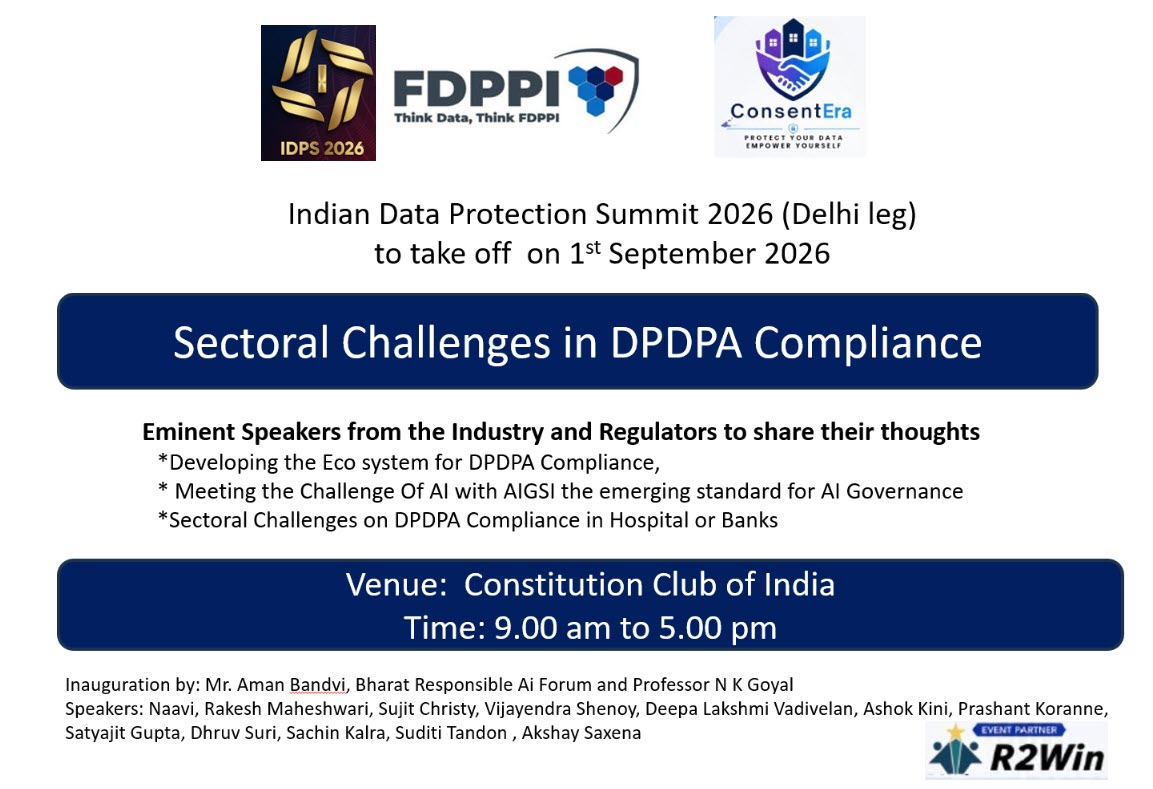
IDPS or Indian Data Protection Summit is an annual flagship event of FDPPI. IDPS 2026 this year’s version will be conducted as a two location event in Delhi and Bengaluru.
The Delhi leg of IDPS 2026 will be launched on 1st September 2026 and the Bengaluru leg will take place on November 21, 2026.
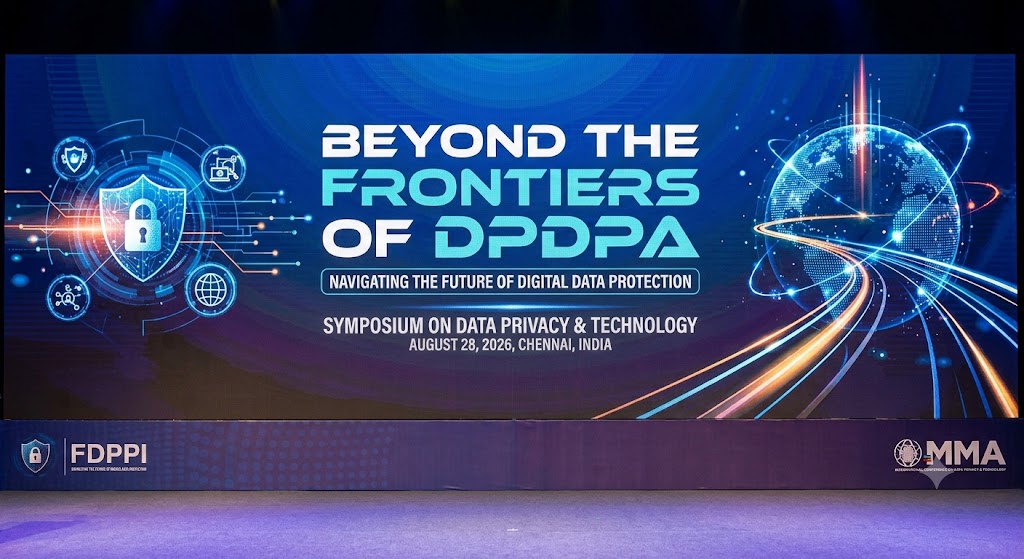
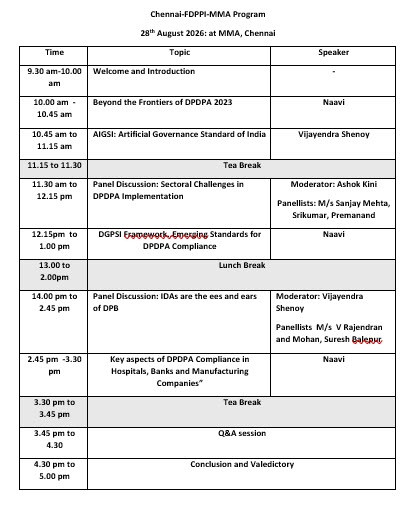
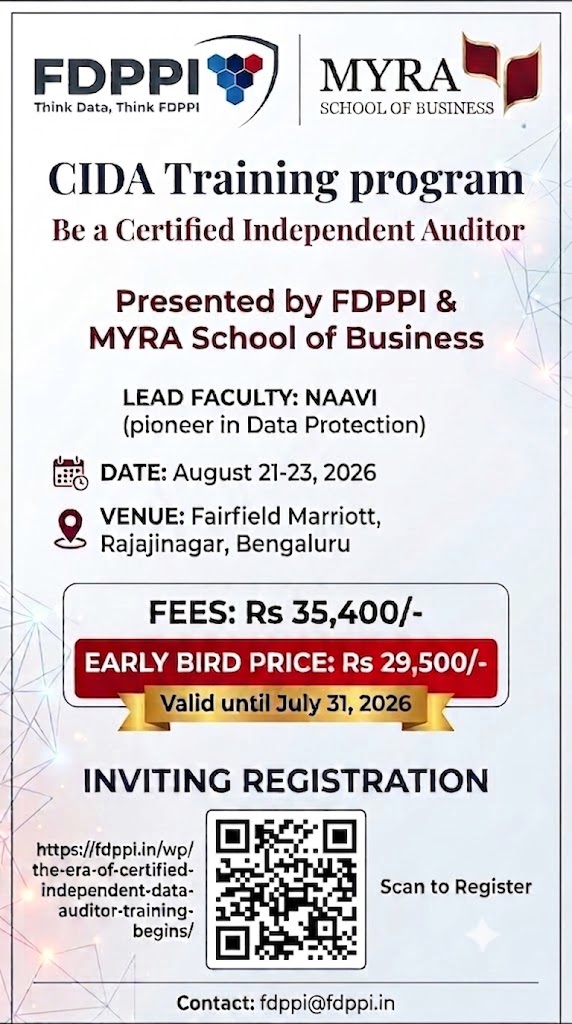
After successfully concluding the three day training program for Certified Independent Data Auditors, FDPPI is moving to Chennai to conduct a day long symposium in association with MMA on “Beyond the Frontiers of DPDPA”.
Interesting topic to be discussed during the program include AIGSI (AI Governance Standard of India), DGPSI-Banks, (Data Governance and Protection Standard of India-Banks”) and “Role of Independent Data Auditors”.
Yes this is a call to induce the FOMO feeling. Some may think I am unethical in invoking the FOMO feeling. But when some thing unique is happening and a deserving person is likely to miss out due to ignorance, it is necessary to take some efforts to ensure that decisions are based on proper information.
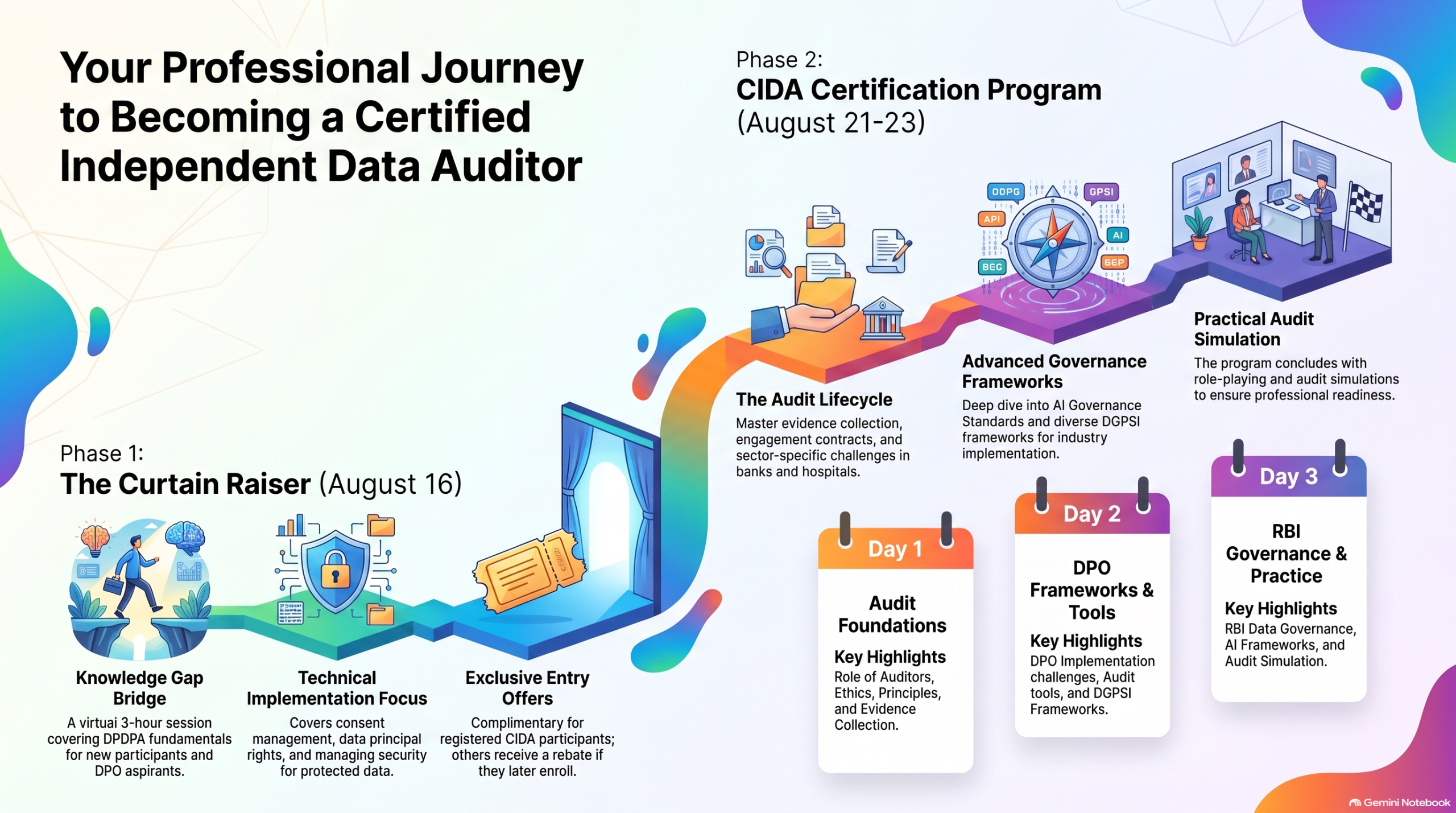
The virtual program on August 16 at 10.00 am ( and going upto at least 1.00 pm) is considered a “Curtain Raiser” for the 3 day program on August 21-23 happening at Fairfield Marriott in Bangalore.
Simultaneously it is meant to bridge the knowledge gap for the participants compared to those who have gone through the stage by stage training of FDPPI from CDPP-I, CDPP-G and C.DPO.DA.
Those who went through these modules had the privilege of understanding DPDPA Act, Rules, ITA 2000, GDPR etc before they plunged into C.DPO.DA. which was a common program both for the employment aspirants who wanted to be DPOs and consultants who wanted to be DPDPA auditors.
Since the immediate requirement was for implementation the need for DPOs was more urgent. The time for Independent Data Auditors is after 13th May 2027 and we are now getting ready to understand this new profession. Just as we have been advocating that Companies should start their compliance exercise without waiting for 13th May 2027 since it is a journey that requires time, the Independent Data Auditor activity is also a journey. We have started early talking about it and creating a development road map since it will take time for professionals in this space to blossom.
The program on August 21 will be the first CIDA program. Since some of the participants who are registered will be people who have not gone through the earlier programs on DPDPA and DPO conducted by FDPPI, it was considered our duty to conduct this curtain raiser program to bridge the knowledge gap that may exist. It will also be a refresher for those who have gone through the C.DPO.DA. program earlier.
Hence we are offering this program as complimentary to all those who are registered for the Aug 21 program.
Additionally, we are also offering entry to this program at a fee of Rs 3540/- to those who are not registered for the August 21 program either because they are still undecided or they want to just want to know what it would be like to be a DPO. If some body attends this program as a paid participant and later decides to attend the CIDA program, we will give them a rebate in the fees so that they will not feel that they paid more ..though they will receive more in return.
This kind of offer is unique to FDPPI and it may take time for the market to appreciate the intentions. Hence it is necessary to call out the FOMO feeling.
Let me briefly explain what we are likely to cover in the August 21-23 program.
Day
Session
Topic
1
1
Introduction, Role of Data Audit, Role of a Data Auditor, Distinction of a DPO and Auditor Role,Code of ethics, Engagement Contract,
1
2
Audit Principles , Evidence Collection, Audit Lifecycle, Audit Challenges in Sectors like Banks and Hospitals. Audit aggregation. A case study.
2
1
The DPO’s challenges in Implementation of DPDPA . The consent Management framework. Use of Audit tools. Understanding organizational context and business model, stakeholder interview, designing audit checklists, sampling strategy and time budgeting. AI Governance Standard of India
2
2
Discussion on DGPSI Frameworks. A discussion with Industry experts.
Lessons from the Data Governance Framework and AI Governance Framework suggested by RBI
Discussions
3
2
Audit Simulation and Role Play
Discussions
Participant feedback
Keeping the above in mind, we want to cover Fundamentals of DPDPA and DPDPA rules and also the technical challenges faced by DPOs in the implementation such as Setting up a Governance system, Consent Management, Data Principal Rights Management, Data Breach Management, Security of DPD (DPDPA protected data) etc in the crash program on August 16.
We will not be able to repeat the basics of DPDPA and the DPO requirements when we discuss the audit requirements on Aug 21-23.
It is therefore useful for all participants to attend this e hour session to refresh their thoughts.
We are conducting this one week in advance so that during this week, the participants can go through some of the earlier library of reference videos that we will suggest and also the books , Guardians of Privacy, Wisdom companion, DGPSI and DGPSI-AI.
To facilitate that during the CIDA program all will have the required background on DPDPA and its implementation, FDPPI is conducting a curtain raiser program on 10th August 2026 (Virtual) at 10.00 am.
All persons who register for the CIDA event will have a free entry to this mini event. Others can join at a fee of Rs 3540/- including GST.
If the participants of this program later register for CIDA program, there will be a discount of the amount of Rs 3540/- from the amount payable for CIDA.
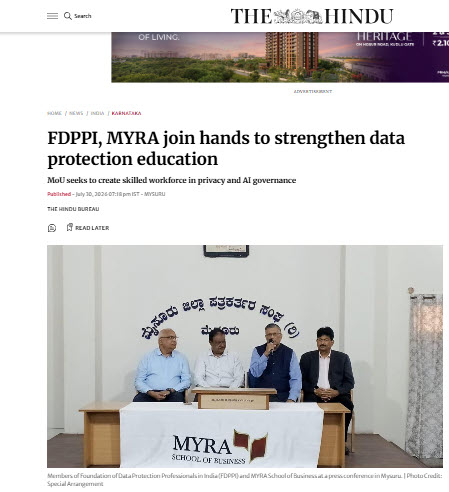
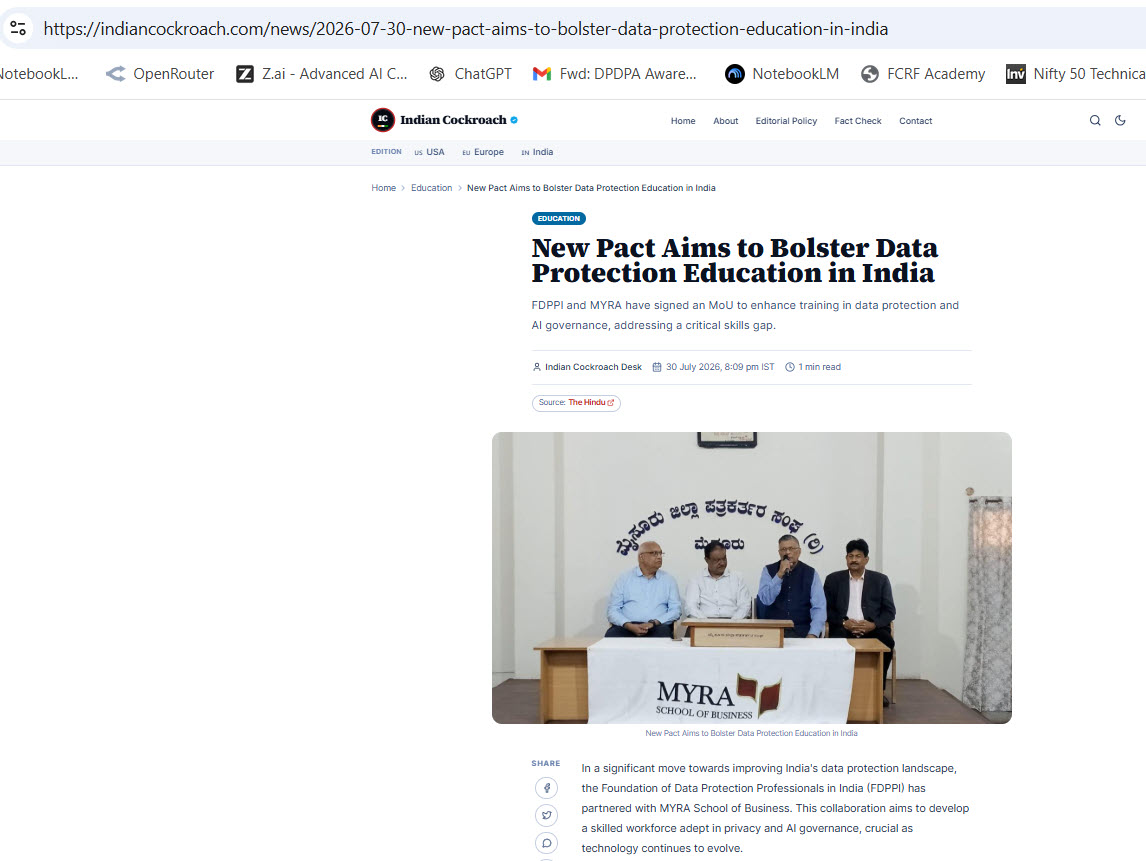
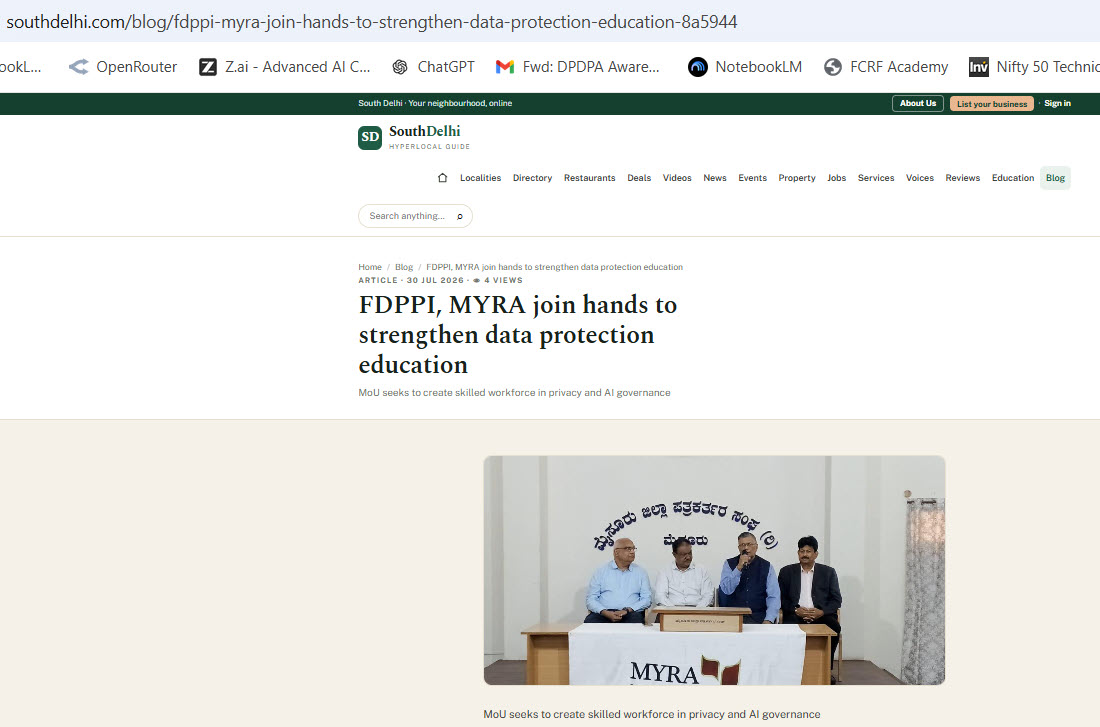
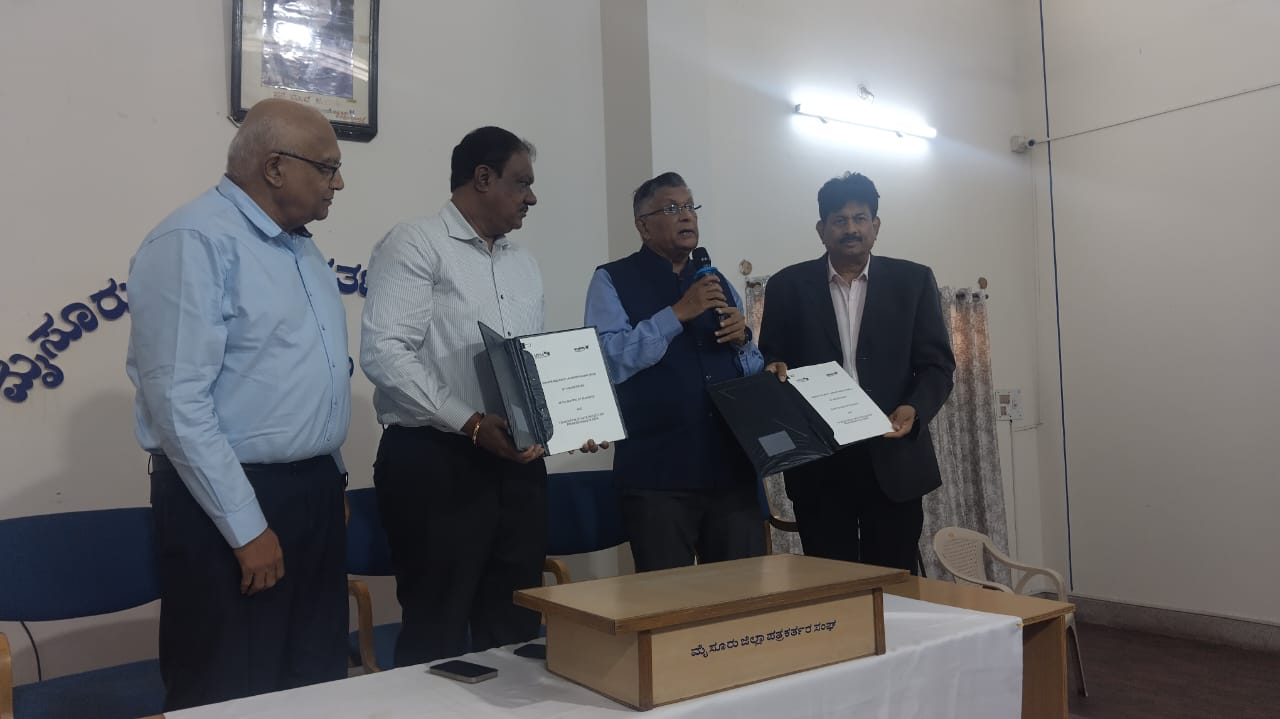
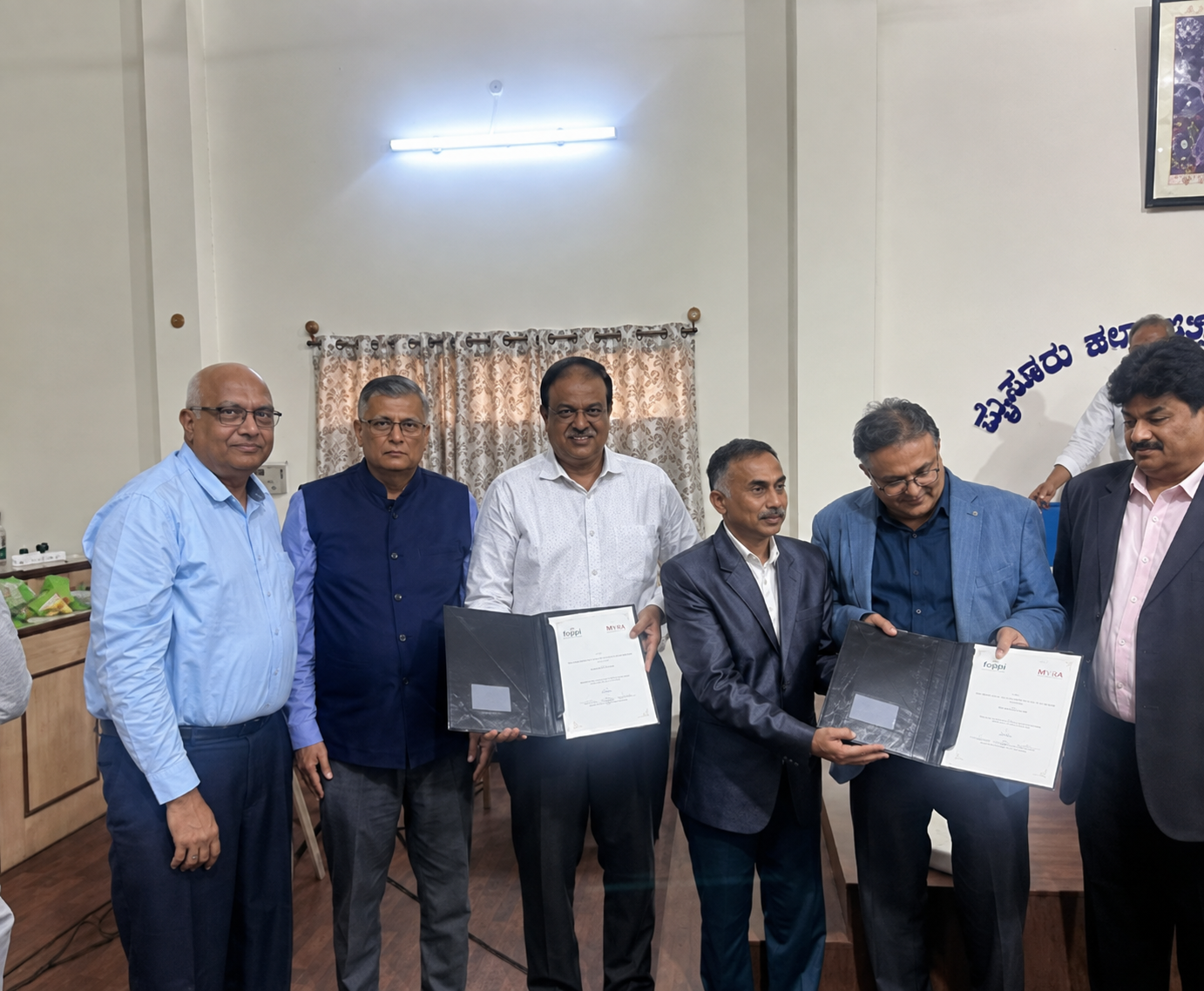
Mr M L Kantharaja Urs, Management Trustee of MYRA School of Business and Naavi exchanged the MOU for collaboration, at a simple function at the Press Club, Mysuru.
A Press Release issued in the context is given below.
FDPPI and MYRA School of Business Forge Strategic Partnership to Advance Data Protection and AI Governance Education
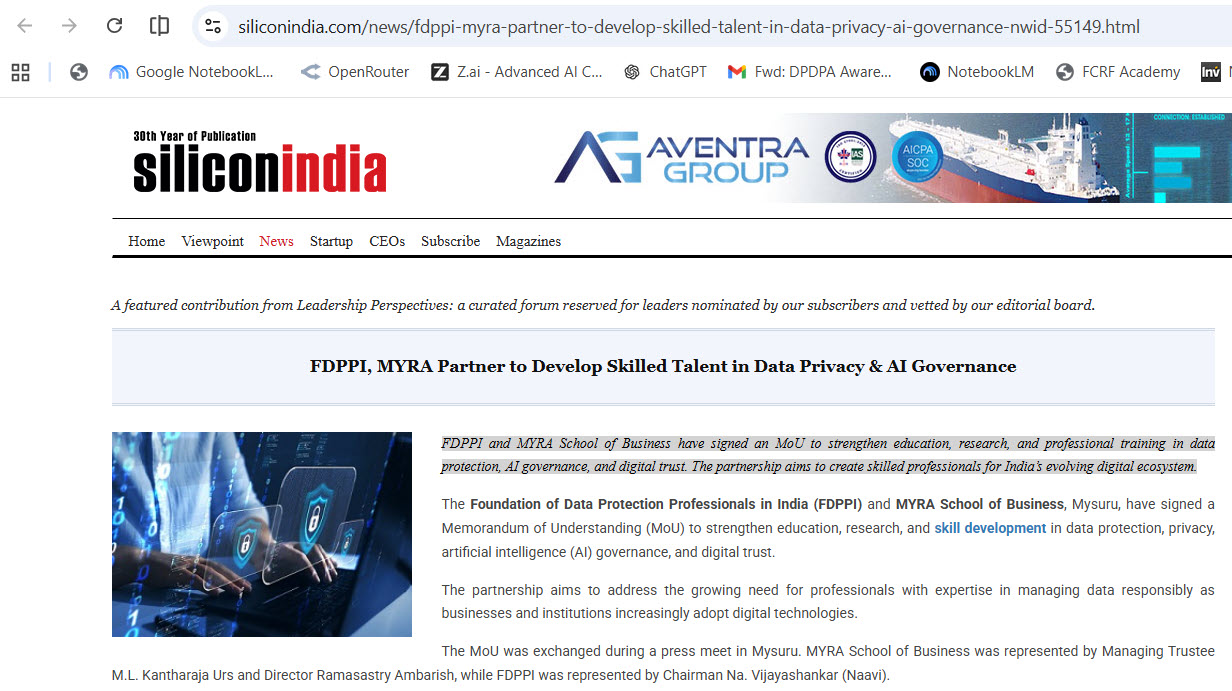
Mysuru, 29 July 2026: In a landmark initiative to strengthen India’s capabilities in Data Protection, Privacy, AI Governance, and Digital Trust, the Foundation of Data Protection Professionals in India (FDPPI) and MYRA School of Business, Mysuru, today signed a Memorandum of Understanding (MoU) to collaborate in education, research, professional certification, and capacity building.
The MoU was formally exchanged during a press meet held at Mysuru. The agreement was signed on behalf of MYRA by Mr. M. L. Kantharaja Urs, Managing Trustee, and Dr. Ramasastry Ambarish, Director, while Na. Vijayashankar (“Naavi”), Chairman of FDPPI, represented FDPPI.
The collaboration brings together the complementary strengths of the two institutions. FDPPI, India’s premier not-for-profit professional body dedicated to Data Protection and Privacy, contributes its extensive industry expertise, practical implementation frameworks including the Data Governance and Protection Standard of India (DGPSI), and a nationwide network of professionals. MYRA School of Business, an AICTE-approved institution recognised for academic excellence and innovation in management education, contributes its academic infrastructure, research capabilities, and commitment to developing future business leaders.
Under the partnership, the two organisations will jointly design and deliver co-branded certification programmes, executive education courses, faculty development programmes, seminars, workshops, conferences, and research initiatives covering Data Protection, Privacy, Cyber Law, AI Governance, Digital Trust, and related disciplines.
Speaking on the occasion, Na. Vijayashankar (“Naavi”), Chairman of FDPPI, said:
“India’s Digital Personal Data Protection Act has created an unprecedented demand for professionals who understand the intersection of law, technology, governance, and business. This collaboration with MYRA School of Business marks an important milestone in building a robust ecosystem for high-quality education and professional certification. Together, we aim to create globally competent Data Protection Officers, Independent Data Auditors, AI Governance professionals, and Digital Trust leaders.”
Mr. M. L. Kantharaja Urs, Managing Trustee of MYRA School of Business, observed:
“At MYRA, we believe that management education must continuously evolve to address emerging societal and business challenges. Data has become one of the most valuable assets of every organisation, and responsible governance of data is now a critical leadership competency. Our collaboration with FDPPI enables us to bring industry-driven knowledge into the academic environment and offer programmes that are both relevant and impactful.”
Dr. Ramasastry Ambarish, Director of MYRA School of Business, said:
“The future belongs to professionals who can combine technological understanding with ethical and regulatory awareness. This partnership reflects MYRA’s commitment to interdisciplinary education that prepares students and working professionals for the demands of a digitally governed economy. We look forward to developing innovative learning programmes, research initiatives, and industry engagement activities jointly with FDPPI.”
The collaboration is expected to support:
Co-branded professional certification programmes.
Executive education and continuing professional development.
Industry-oriented curriculum development.
Faculty development programmes.
Student internships and industry immersion.
Collaborative research and publications.
Conferences, seminars, and knowledge-sharing initiatives.
Capacity-building programmes for industry, government, regulators, and educational institutions.
The partnership is expected to play a significant role in building India’s professional ecosystem for privacy, responsible AI, cybersecurity, and digital governance, while supporting the implementation of the Digital Personal Data Protection Act, 2023, and emerging national and international governance frameworks.
The first series of jointly developed certification programmes is expected to be announced in the coming months.
About FDPPI
The Foundation of Data Protection Professionals in India (FDPPI) is India’s leading not-for-profit professional organisation dedicated to promoting excellence in Data Protection, Privacy, Cyber Law, AI Governance, and Digital Trust. Through initiatives such as the Data Governance and Protection Standard of India (DGPSI), FDPPI has been at the forefront of developing indigenous frameworks, professional certifications, industry guidance, and capacity-building programmes supporting India’s digital transformation.
About MYRA School of Business
MYRA School of Business, Mysuru, is an AICTE-approved institution committed to creating globally competent leaders through innovative management education, research, and industry engagement. MYRA combines academic rigour with practical relevance, preparing students and executives to lead organisations in a rapidly evolving global economy.
Media Contacts
Foundation of Data Protection Professionals in India (FDPPI) Website: www.fdppi.in

 We are now around 213 days from 13th May 2027 when DPDPA will be fully effective. Many organizations have already started implementation. Action has started on three fronts